
☀ Free Sect Calculator: Day Chart or Night Chart?
Umbriel's free sect calculator tells you whether your birth chart is a day chart or a night chart, from how high the Sun stood above or below the horizon at your birth date, exact time and place.
Free, no account, no email. Runs in your browser.
14160+ people cast their chart here in the last 30 days.
No account, no email. Sect is worked out from the Sun's height at your birth moment and place.
TRADITIONALA traditional technique: in the books before 1700.
- What you'll needBirth date, exact time and place
- What you getDay chart or night chart, the Sun's height at your birth, the planets traditionally in sect, and the rest of your birth chart
- CostFree, no account required
What sect is
Sect is the old rule that every birth chart belongs to the day or to the night. A day chart is one where the Sun was above the horizon at birth, which in the usual quadrant house systems puts it in houses 7 to 12. A night chart is one where the Sun was below the horizon, in houses 1 to 6. It goes back to the Hellenistic astrologers of the first centuries CE.
Deeper.a one-breath read
In the tradition the Sun leads a day chart and the Moon leads a night chart. In a day chart, Jupiter is the kindly planet of the sect and Saturn the hard one that behaves better by day; in a night chart, Venus is the kindly one and Mars the hard one that is easier to live with. Planets out of sect are read as working with more difficulty. The old formulas for the Part of Fortune and the Lot of Spirit also turn over between day and night.
It needs the exact time, because the Sun crosses the horizon twice a day. For a birth in the hour of sunrise or sunset, a few minutes can make the other answer.

How Umbriel computes it
Deeper.a cup-of-tea read
Umbriel works out the Sun's position and its height above the horizon at your birth moment and place. If the centre of the Sun was above the horizon (a positive height), it is a day chart; below it, a night chart. That is the same as the Sun standing in the upper half of the chart, between the Descendant and the Ascendant, or in the lower half. The height is geometric, with no allowance for the bending of light at the horizon; some astrologers count from the sunrise and sunset times instead, which differ by a few minutes. When the Sun is within a degree of the horizon, Umbriel says so. Near the poles the Sun can stay above the horizon all day or below it all day; the rule still gives an answer, so a birth in the midnight sun is a day chart and a birth in the polar night is a night chart, even at noon.
What's in your result
Deeper.a one-breath read
- Day or nightThe answer in one word, from the Sun's height at your birth.
- The Sun's heightHow many degrees above or below the horizon it stood, so you can see how close the call was.
- Planets in sectThe kindly and the hard planet the tradition gives your kind of chart.
- The lotsThe Part of Fortune and the Lot of Spirit, which use the day or night formula.
- Your whole chartThe Sun, Moon and Rising sign on the same page.
Don’t know your birth time?
Deeper.a cup-of-tea read
Know it roughly? Give the time and say where it came from (a certificate, a parent’s memory, or something rough like “early morning”), and your chart tells you what could change within that window.
Don’t know it at all? Umbriel does not fill the gap with a guess. Tick “I don’t know the time at all” and it checks your whole birthday, hour by hour, then tells you two things: which placements are the same whatever time you were born, as exact as they would be if you knew the minute, and which are down to two signs, both named, so you know what a parent’s memory would settle.
The Ascendant, the Midheaven and the houses are left out rather than approximated. A birth time is the one thing they cannot be computed without, and an approximate Rising sign that looks exact is worse than no Rising sign at all.
Common questions
What is a day chart and a night chart?
A day chart is a birth with the Sun above the horizon; a night chart is a birth with the Sun below it. Astrologers have used the split since Hellenistic times to decide which planets are comfortable in a chart and which have to work harder.
How do I know if I have a day chart or a night chart?
In most house systems, check whether the Sun is in houses 7 to 12 (day) or 1 to 6 (night). This calculator does it from the Sun's height at your birth moment and place, so the answer does not depend on the house system you use.
What does it change in my chart?
In a day chart Jupiter and Saturn are in sect and the Sun leads; in a night chart Venus and Mars are in sect and the Moon leads. The Part of Fortune and the Lot of Spirit swap their formulas between the two. Traditional astrologers read a planet in sect as easier to live with. It is a tradition to try on, not a rule about anyone's life.
What if I was born at sunrise or sunset?
Then the exact minute decides it, and a time that is a few minutes out can turn the answer around. Umbriel tells you when the Sun was within a degree of the horizon.
Can I find my sect without a birth time?
No. The Sun crosses the horizon twice a day, so the date alone cannot say. Umbriel leaves it out rather than guessing.
Is this sect calculator free?
Yes: day or night, the Sun's height and the planets in sect, with no account and no email, calculated in your own browser.
What if I don’t know my birth time?
Umbriel checks your whole birthday hour by hour and separates what is certain from what is not. Placements that are the same whatever time you were born are shown as exact. Placements that changed sign during the day are shown as two named signs, so you know what a parent's memory would settle. The Ascendant, Midheaven and houses are left out rather than approximated. They cannot be computed without a time, and an approximate Rising sign that looks exact is worse than none.
Do I need an account or an email address?
No. There is no sign-up, no email capture and no free trial. Enter your details and the result is drawn in your own browser.
Go deeper
Every one of these is a page in its own right — written out, not generated on the fly.
Related free tools
 Next doorPart of Fortune CalculatorUmbriel's free Part of Fortune calculator finds your Lot of Fortune from your birth date, time and place, using the day or night formula according to whether you were born with the Sun above or below the horizon.
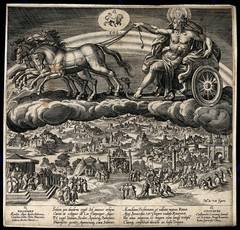
Prints in the head of this page, all public domain except where stated: Apollo riding the chariot of the Sun across the heavens. Engraving by J. Sadeler after M. de Vos, Wellcome Collection; a woodcut sun with a face, Proposals from the Sun-Fire-Office, London, 1757, Cambridge University Library (Fleuron); Johannes Hevelius, Machina coelestis, Danzig, 1673, Houghton Library.
Further down the page: Apollo Granting Phaeton Permission to Drive the Chariot of the Sun, Johann Michael Rottmayr, c. 1695, Art Institute of Chicago. The next-door print comes from that page's own head. The pointing hand: a pointing hand, after a medieval manuscript margin (line art by Jerimee).
Umbriel offers every system here as a set of prompts to think with, never as a statement of fact about who you are. Take what's useful, leave the rest.