Of the Head and Tail of the Dragon
The Moon’s nodes, which Lilly called the Dragon. Short, and a little ominous.
[p. 52] The Head of the Dragon.—The head of the Dragon is masculine, of the nature of ♃ and ♀, and of himself a fortune.†
The Tail of the Dragon.—The Tail of the Dragon by nature is quite contrary to the Head, for he is evil. I ever found the ☊ equivalent to either of the fortunes, and, when joined with the evil planets, to lessen their malevolent signification; when joined with the good, to increase the good promised by them. The Tail of the Dragon I always, in my practice, found, when he was joined by the evil planets, their malice or the evil intended thereby was doubled and trebled, or extremely augmented, &c.; and when he chanced to be in conjunction with any of the fortunes who were significators in the question, though the matter by the principal significator was fairly promised and likely to be perfected in a small time, yet did there ever fall out many rubs and disturbances, much wrangling and controversy, that the business was many times given over for desperate before a perfect conclusion could be had; and unless the principal significators were angular, and well fortified with essential dignities, many times unexpectedly the whole matter came to nothing.
The notes
† These points are of no consequence in nativities, except as regards the Moon, who brings benefits when she reaches the ☊ in the zodiac by directional motion, and evil when she reaches the ☋. (a note, p. 52)
Old words on this page
- significator
- the planet that stands for a person or a thing in the chart.
In the app the old words open a note in the margin when you tap them, the old books read the planets of your own chart, and each book opens where you left it. Free, no account, no email.
14160+ people cast their chart here in the last 30 days.
Keep reading
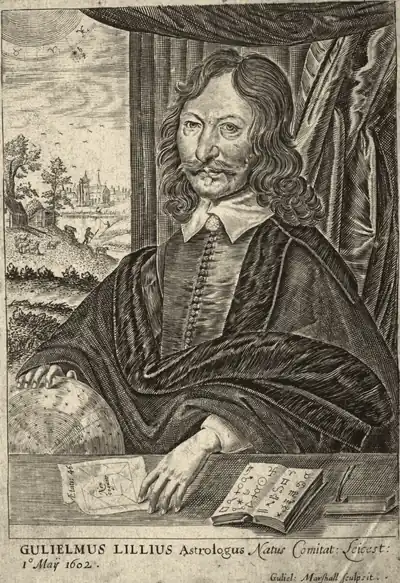
The text is the 1852 edition by Zadkiel, checked word by word against the 1898 printing of the same plates. Pages are cited as the 1852 printing numbers them. The portrait is William Marshall’s engraving of Lilly from the front of the 1659 printing (Wellcome Library, public domain).