Of Leo
Leo in 15 AD: hunters with trophies on the wall, quick tempers, open hearts.
[p. 11] What Inclinations Leo's Rays dispenseIs quickly known, 'tis plain to Common Sense,He gives his Own; for he the Woods infestsThe mighty Terror of the meaner Beasts:He lives on Rapine, ranges all the Day,And sullenly at Night groans o're his Prey.
[p. 12] Hence he inclines Mens Minds to Hunt, and fillsOur Nobles spacious Halls with grinning spoyls;There Skins and Horns do spread a dismal graceAnd stand as certain Heraulds of their Race;This Beast was mine, and that my Father's Game,They cry, these are the Annals of their Fame:That generous Youth which France and Spain did fearNow prove the Humble Terror of a Deer.
Nay some in ²⁰Towns pursue this wild delight,There barbarous grow, and breed up Beasts to fight;Then bring them out for sight in Theaters,And feast their Luxury with Bruitish Wars;Cruel in Sport; Their Posts are grac't with Spoyl,And they get shameful Honour without Toyl:He makes Men warm, their Passions quickly rais'd,Like Boys soon angry, and as soon appeas'd:But Plain and Honest all their Thoughts sincere;Pure as the Sun, and like the Water clear.
The notes
²⁰ Scaliger thinks Manilius means such as keep Beasts for publick Shews, and to fight in the Theaters; and this Interpretation I rather follow than that of Huetius, who fancies the Poet means by this pompous Description no more than innocent, honest Butchers. (Creech’s note, 1697)
In the app the old words open a note in the margin when you tap them, the old books read the planets of your own chart, and each book opens where you left it. Free, no account, no email.
14160+ people cast their chart here in the last 30 days.
Keep reading
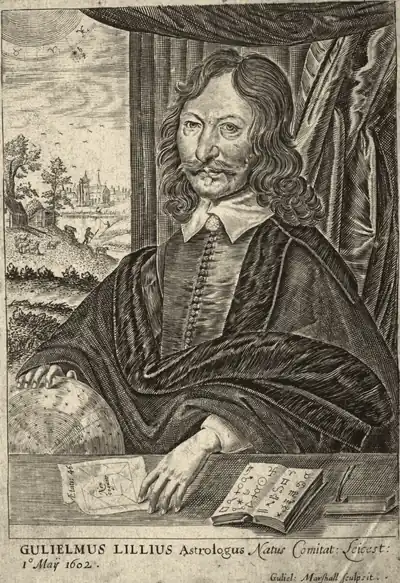
The text is Thomas Creech's 1697 verse translation, checked word by word between three scans of the same type (the 1697 printing, the 1700 printing and a third copy). The long s is printed as s; every other spelling is Creech's. Pages are cited as the 1697 printing numbers them. The portrait is William Marshall’s engraving of Lilly from the front of the 1659 printing (Wellcome Library, public domain).