Fourth Argument
Why great people are rare, and death is certain.
[p. 8] That every Age no new Camillus breath,The ¹⁶Decij dye, or ¹⁶Cato conquer Death,'Tis not but that the Seed can still receiveAs noble Stamps, but Fates refuse to give.To fewer Days they do not cramp the Poor,Nor brib'd by Wealth, enlarg'd the Rich with more;There Riches lose their force, the shining YearsOf glorious Tyrants must be turn'd in Tears;They dig a Grave for Kings, and fix the Day;How great must be that Power which Crowns obey!
The notes
¹⁶ Furius Camillus was the restorer of Rome, after it had been taken and burnt by the Gauls: Of the Family of the Decij there were Three, who voluntarily devoted themselves to Death, for the Good and Prosperity of their Country: Cato Uticensis, who kill'd himself that he might not survive the Liberty of Rome. (Creech’s note, 1697)
In the app the old words open a note in the margin when you tap them, the old books read the planets of your own chart, and each book opens where you left it. Free, no account, no email.
14160+ people cast their chart here in the last 30 days.
Keep reading
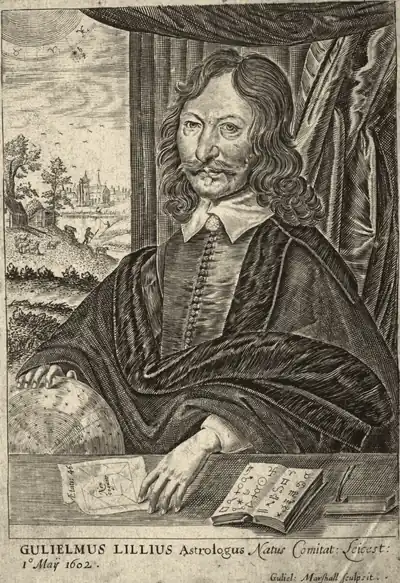
The text is Thomas Creech's 1697 verse translation, checked word by word between three scans of the same type (the 1697 printing, the 1700 printing and a third copy). The long s is printed as s; every other spelling is Creech's. Pages are cited as the 1697 printing numbers them. The portrait is William Marshall’s engraving of Lilly from the front of the 1659 printing (Wellcome Library, public domain).