Tropical, Equinoctial, Fixed, and Bicorporeal Signs
Cardinal, fixed and double signs: how a sign starts, holds or splits.
[p. 34] Among the twelve signs, some are termed tropical, others equinoctial, others fixed, and others bicorporeal.
The tropical signs are two: viz. the first thirty degrees after the summer solstice, which compose the sign of Cancer; and the first thirty degrees after the winter solstice, composing the sign of Capricorn. These are called tropical, because the Sun, after he has arrived at their first points, seems to turn, and to change his course towards a contrary latitude*; causing summer by the turn he makes in Cancer, and winter by that which he makes in Capricorn.
There are also two equinoctial signs: Aries, the first after the vernal equinox; and Libra, the first after the autumnal equinox: they are so called, because the Sun, when in the first point of either, makes the day and night equal.
[p. 35] Of the remaining eight signs, four are fixed, and four bicorporeal. Those signs, which severally follow immediately after the two tropical and the two equinoctial signs, are termed fixed, because, during the Sun’s presence in them, the cold, heat, moisture or dryness, of the season, which commenced on his arrival in the preceding tropical or equinoctial sign, is then more firmly established:—not, however, that the temperament of the season has in itself actually increased in vigour, but, having continued for some time in operation, it then renders all things more strongly affected by its influence.
The bicorporeal signs severally follow the fixed signs; and, being thus intermediately placed between the fixed and the tropical signs, they participate in the constitutional properties of both, from their first to their last degrees.
The notes
* In other words, the Sun then begins to diminish his declination, which, at the first points of the said signs, is at its greatest amount. (Ashmand’s note, 1822)
Old words on this page
- viz
- short for videlicet, Latin for "namely".
In the app the old words open a note in the margin when you tap them, the old books read the planets of your own chart, and each book opens where you left it. Free, no account, no email.
14160+ people cast their chart here in the last 30 days.
Keep reading
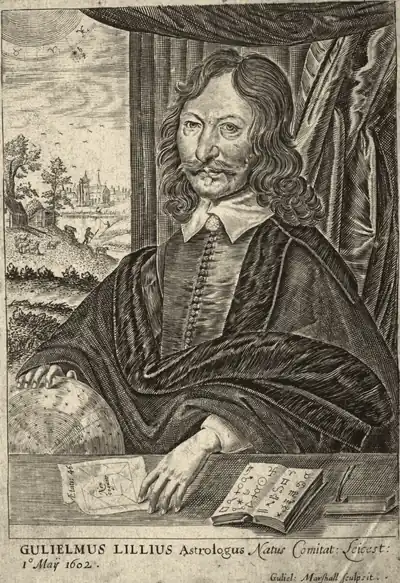
The text is J. M. Ashmand's 1822 translation, checked word by word between two scans of the 1822 printing (Wellcome Library and Harvard). Pages are cited as the 1822 printing numbers them. The portrait is William Marshall’s engraving of Lilly from the front of the 1659 printing (Wellcome Library, public domain).