
❖ Free Electional Astrology Calculator: Find Your Best Dates
TRADITIONALA traditional technique: in the books before 1700.
Tell Umbriel what you are about to start and how far ahead to look, and it searches every day in that range against the traditional electional rules. You get the best day, a good run of hours inside it, and the reason each day passed or failed. It picks the sky, not the outcome.
Free, no account. It runs in your browser.
4420+ people cast their chart here in the last 30 days.
- What you'll needNothing
- What you getThe best day in your range, a good stretch of hours inside it, and the receipts: every rule the day passed or failed
- CostThe best day is free, with no account. The ranked top five and the check against your own chart are part of Membership.
What it is
An astrologically favourable date does not guarantee an outcome. Nothing on this page can tell you how a contract, a first date or a move will go. It reports what the Moon and the planets are doing on each day and what traditional astrologers made of that. Your calendar, the other person's diary and your own judgement come first.
Electional astrology is choosing a moment to begin something, rather than reading a moment that has already happened. This calculator does it for nine everyday beginnings: signing a contract, launching something, starting a job, moving house, a first date, a proposal, a journey, a hard conversation and a new habit.
Two different questions. Checking one moment asks whether this particular time is a clean one to begin. The Void of Course Moon calculator answers that for today's void windows and the ones coming, and Planetary Hours shows the planet ruling the hour you are in. Searching a range asks which days in a stretch of calendar are best, and that is what this calculator does: the next 30 days, 90 days or a year, for one kind of beginning.
The factors it checks
These are all of them. Planetary hours are not among them: this calculator looks at the Moon hour by hour inside a day, but it does not use the planetary hour rulers. For those, see the Planetary Hours calculator.
- The Moon void of courseThe stretch between the Moon's last aspect in a sign and its move into the next. If the Moon is void for 8 or more of the 15 waking hours (07:00 to 22:00), or leaves no clean run of 2 hours or more, the day is held back and ranked beneath every open day. A shorter void only moves the good stretch around it.
- Mercury retrogradeChecked from Mercury's real speed at noon. For some activities a retrograde Mercury keeps the day out of the running; for others it only counts against the day; for a first date and a habit it is ignored. The table below says which.
- The Moon's phaseA waxing Moon is wanted for a beginning, and a waning one counts against it. The dark of the Moon, within 12 degrees of the Sun (about a day either side of the New Moon), counts against anything. For a hard conversation the phase is treated as neutral.
- The Moon's signThe Moon at home in Cancer or exalted in Taurus helps. The Moon in Scorpio or Capricorn counts against. Otherwise each activity has three signs that suit it, listed in the table below.
- The Moon's aspectsA trine or sextile from the Moon to the planet that rules the activity helps, and a square or opposition counts against, all within 6 degrees. A trine or sextile to Venus or Jupiter is a small help. A square or opposition from the Moon to Mars or Saturn counts against.
- How the activity's own planet is doingThat planet at home or exalted helps. In its uncomfortable sign or at a low ebb it counts against, and so does a retrograde one.
- The good stretch of hoursInside each day the room looks hour by hour for the longest run, between 07:00 and 22:00, when the Moon is neither void of course nor within 3 degrees of a square or opposition to Mars or Saturn. A run longer than six hours is narrowed to the six that sit closest to the Moon's friendly aspect to the activity's planet.
- Your own chart (Membership)With your birth chart saved, Mars, Saturn, Pluto, Uranus and Neptune squaring or opposing your Sun, Moon, Ascendant or Midheaven within 2 degrees count against a day, and Venus or Jupiter trining or sextiling them help. Without a birth time the Ascendant and Midheaven are left out.
Why a day passes or fails
Every rule adds or takes away a point or two, and the two that hold a day back count six. A day is held back, and ranked beneath every open day however well it scores, when the Moon is void for most of the waking day or when Mercury is retrograde for an activity that bars it. Every other day is ranked by its points, earliest first when they tie. Each day shows its receipts, the exact sentence for every rule it met:
- FailsMercury is retrograde, which tradition keeps away from anything signed, moved or set going.
- FailsThe Moon is void of course for most of the waking day, so there is no clean stretch to begin in.
- Counts againstThe Moon is waning (Waning Gibbous); tradition preferred a waxing one for beginnings.
- PassesThe Moon is not void of course at any point in the waking day.
- PassesMercury is direct.
| Activity | Planet checked | Mercury retrograde | Waxing Moon | Moon signs that suit |
|---|---|---|---|---|
| Sign a contract | Mercury | Keeps the day out | Wanted | Gemini, Virgo, Libra |
| Launch something | Mars | Keeps the day out | Wanted | Aries, Leo, Sagittarius |
| Start a job | Jupiter | Keeps the day out | Wanted | Taurus, Leo, Capricorn |
| Move house | Venus | Keeps the day out | Wanted | Taurus, Cancer, Libra |
| A first date | Venus | Ignored | Wanted | Taurus, Cancer, Libra |
| Propose or marry | Venus | Counts against, does not bar | Wanted | Taurus, Cancer, Libra |
| Travel | Jupiter | Keeps the day out | Wanted | Gemini, Sagittarius, Aquarius |
| Have a hard conversation | Mercury | Counts against, does not bar | Neutral | Gemini, Virgo, Libra |
| Start a habit | Saturn | Ignored | Wanted | Taurus, Virgo, Capricorn |
When the result is uncertain
The points are Umbriel's own weighing of what traditional authors preferred, and those authors did not agree on every weight. Two days a point apart are a tie in any honest sense. Days are cut at local midnight in your device's time zone, the planets are read at noon, and the Moon's sign and aspects at the middle of the good stretch. No place or birth time is asked for the basic search, because the sky is the same for everyone. An astrologically favourable date does not guarantee an outcome, and nothing here claims that choosing a date changes one.
How Umbriel computes it
Nothing here is new astronomy, and no birth details are needed for the basic search. The room reads the same engine that casts the birth charts: the Moon's position for every hour of every day in your range, voidOfCourseMoon for the windows between its last aspect and its next sign, and the positions of Mercury, Venus, Mars, Jupiter and Saturn at noon, with Mercury's speed checked for a retrograde. Each day is scored against the rules for the activity you chose, the good stretch is the longest run of hours when the Moon is neither void nor under a hard aspect from Mars or Saturn, and any day held back by a barring rule sits beneath every open day. The search is the same one the 'When's a good day to' room runs, and this page opens it with your choices filled in.
What's in your result
- The best dayOne date from your range that clears every barring rule and scores highest, with its reasons.
- A good stretch of hoursA run of hours inside that day when the Moon is clear of a void window and of a hard aspect from Mars or Saturn.
- The receiptsThe exact sentence for every rule the day met, so you can see why it passed or failed.
- One day to steer roundWhen an obvious one sits in your range, such as a long Mercury retrograde for a contract, it is named with the reason.
- The ranked top five (Membership)Five days instead of one, each with its receipts, and the check against your own chart.
Common questions
What is an electional astrology calculator?
A tool that searches a stretch of calendar for the best moment to begin something, using the traditional electional rules. Umbriel's ranks every day in your range for the activity you choose and shows the reasons.
Is this the same as checking one moment?
No. Checking one moment asks whether a single time is clean, for example whether the Moon is void of course right now. This calculator searches a whole range, the next 30 days, 90 days or a year, and ranks the days.
Does it use planetary hours?
No. It looks at the Moon hour by hour inside each day, but it does not use the planetary hour rulers. The Planetary Hours calculator covers those separately.
Does an astrologically favourable date guarantee a good result?
No. It means the Moon and planets match what traditional astrologers preferred for that kind of beginning. It cannot promise an outcome, and your own calendar and judgement come first.
Why does Mercury retrograde matter for a contract?
Tradition matched Mercury to writing, agreements and travel, and asked that it be moving forward when they began. For signing, moving, travelling, launching and starting a job, a retrograde Mercury keeps the day beneath every open one.
Do I need an account or an email address?
No. The best day comes with no account and no email, and it is worked out in your own browser. The ranked top five and the check against your own chart are part of Membership.
How far ahead can I search?
The next 30 days, the next 90 days or the next year. A year takes a little longer, because the Moon's void windows are found to the minute.
Go deeper
Each of these is a free tool in its own right.
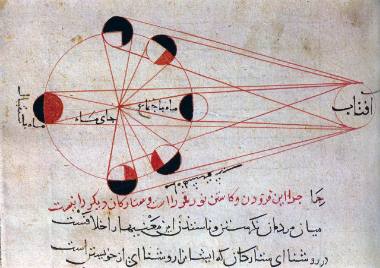
Prints in the head of this page, all public domain except where stated: Lunar phases al-Biruni, Al-Biruni, 18th century, Wikimedia Commons; Astrolabe, Iran Isfahan, Qajar dynasty (1786–1925), Late 18th century with later additions, Art Institute of Chicago; armillary sphere, printer's tailpiece, 1750, Bibliothèque nationale de France.
Umbriel offers every system here as a set of prompts to think with, never as a statement of fact about who you are. Take what's useful, leave the rest.