☊ Free Kaal Sarp Dosh Calculator
Umbriel's free Kaal Sarp dosh calculator checks whether all seven visible grahas (the Sun to Saturn) sit on one side of the Rahu-Ketu axis in your sidereal chart, counted by degree, and names the form from Rahu's house, from your birth date, time and place.
Free, no account, no email. Runs in your browser.
14160+ people cast their chart here in the last 30 days.
No account, no email. It also says plainly what the rule does not decide.
VEDICJyotish: the Vedic tradition, sidereal.
- What you'll needBirth date, time and place
- What you getWhere Rahu and Ketu fall, whether all seven grahas lie on one side and which side, the planets outside if not, and the named form when it is formed
- CostFree, no account required
What Kaal Sarp is
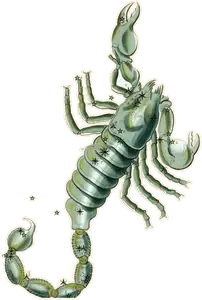
Kaal Sarp (also Kaal Sarpa or Kalsarp, "the serpent of time"; called a dosh or a yoga) is a pattern in a Vedic chart: all seven visible grahas, from the Sun to Saturn, lie on one side of the axis between Rahu and Ketu, the Moon's two nodes. The picture is of a serpent with Rahu as its head and Ketu as its tail, holding the whole chart between them.
Deeper.a cup-of-tea read
It is a late rule. Parashara's Brihat Parashara Hora Shastra and the other classical texts do not describe it (their Sarpa yoga is a different pattern), and it spread in the twentieth century, very often alongside remedies sold to undo it. Umbriel does not sell or recommend remedies. Where the planets sit does not decide what will happen to you, and nothing on this page says it does.
It is here because people look for it, and a calculator that hides the rule only sends them to one that states it without the context. Counted by degree across every birth date from 1950 to 2010, about 7 in 100 form it one way or the other (3 in 100 the way the rule is usually stated), and about a quarter more have exactly one graha outside, which some astrologers call a partial form. That is the plainest fact about the rule.
How Umbriel computes it
Deeper.a cup-of-tea read
Umbriel casts your chart in the sidereal zodiac (Lahiri unless you choose another on the Vedic page) with the mean node, as classical Jyotish uses. It then counts by degree, not by sign: a planet in Rahu's own sign but behind it is on the other side of the axis, and a count by sign would miss that.
"Between Rahu and Ketu" runs in the zodiac's order from Rahu: Rahu in the 1st house, Ketu in the 7th, the planets in the houses between. When all seven lie the other way round, between Ketu and Rahu, Umbriel says so separately, because some lineages call that Kaal Amrit and count it apart while others count it as Kaal Sarp too. When the pattern is not formed, it names the planets outside instead of calling the chart "partial".
The twelve named forms go by the house Rahu holds from the Lagna: Anant (1st), Kulik (2nd), Vasuki (3rd), Shankhpal (4th), Padma (5th), Mahapadma (6th), Takshak (7th), Karkotak (8th), Shankhachud (9th), Ghatak (10th), Vishdhar (11th) and Sheshnag (12th). The name needs a birth time; the count does not.
What's in your result
Deeper.a one-breath read
- Rahu and KetuTheir sidereal signs and degrees, and Rahu's house when the time is known.
- Formed or not, and which wayAll seven between Rahu and Ketu, all seven between Ketu and Rahu, or neither.
- The planets outsideWhen it is not formed, which grahas sit on the other side.
- The named formAnant to Sheshnag, from Rahu's house, when it is formed and the time is known.
- What the rule does not sayOne plain sentence, on the page and in the answer.
- The rest of your Vedic chartYour Lagna, Moon sign and nakshatra and the dashas, on the same page.
Common questions
Do I have Kaal Sarp dosh?
By the rule, you have it if all seven grahas from the Sun to Saturn lie on one side of the Rahu-Ketu axis in your sidereal chart. Umbriel counts it by degree and shows which side each planet is on. About 7 in 100 birth dates from 1950 to 2010 form it one way or the other.
Is Kaal Sarp dosh in the classical texts?
No. Parashara and the other classical authors do not describe it; their Sarpa yoga is a different pattern. Kaal Sarp spread in the twentieth century, often alongside paid remedies. Umbriel shows the count and does not sell or recommend remedies.
What is the difference between Kaal Sarp and Kaal Amrit?
Both have all seven grahas on one side of the axis. In Kaal Sarp they run from Rahu to Ketu in the zodiac's order; in what some lineages call Kaal Amrit they run from Ketu to Rahu. Other lineages count both as Kaal Sarp. Umbriel names the side so you can see which is meant.
What is partial Kaal Sarp?
Usually a chart with one graha outside the axis, or one sitting on a node. There is no agreed rule for it, so Umbriel names the planets outside instead of giving the chart a label.
Why do calculators disagree about Kaal Sarp?
Some count by sign instead of degree, some use the true node instead of the mean, some count only one side as Kaal Sarp, and the ayanamsa moves every planet slightly. Umbriel counts by degree with the mean node and names the side.
Can I check Kaal Sarp without a birth time?
Mostly. The count needs the date, because only the Moon moves fast enough to cross the axis in a day, and Umbriel says when it sits close enough for the time to matter. The named form needs the time, because it comes from Rahu's house.
Is this Kaal Sarp dosh calculator free?
Yes: the count, the side, the planets outside, the named form and the rest of the Vedic chart, with no account and no email, calculated in your own browser.
Do I need an account or an email address?
No. There is no sign-up, no email capture and no free trial. Enter your details and the result is drawn in your own browser.
Go deeper
Every one of these is a page in its own right — written out, not generated on the fly.
Related free tools
 Next doorManglik Dosha CalculatorUmbriel's free Manglik dosha calculator checks the Mars rule from Vedic marriage matching (Mars in the 1st, 2nd, 4th, 7th, 8th or 12th house, counted from the Lagna, the Moon and Venus) and lists the tradition's own cancellations, from your birth date, time and place.
Prints in the head of this page, all public domain except where stated: Astronomy: proceedings in China on the occasion of an eclipse of the sun or moon. Lithograph by J.W. Giles after G.F. Sargent after Fo Shang, 1847, Wellcome Collection; Urania's Mirror, Sidney Hall, 1825, Library of Congress via Wikimedia Commons; Johannes Hevelius, Machina coelestis, Danzig, 1673, Houghton Library. Ground: after Claudius Ptolemy, Ulm, 1482, Wikimedia Commons.
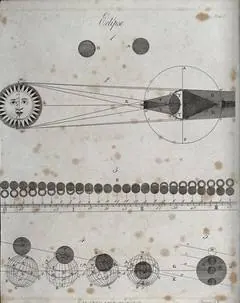
Further down the page: a diagram of an eclipse, engraving by Seale, Wellcome Collection. The next-door print comes from that page's own head. The pointing hand: a pointing hand, after a medieval manuscript margin (line art by Jerimee).
Umbriel offers every system here as a set of prompts to think with, never as a statement of fact about who you are. Take what's useful, leave the rest.