
ॐ Free Vedic Astrology Chart (Jyotish) Calculator
Umbriel's free Vedic chart uses the sidereal zodiac with the Lahiri ayanamsa: your Moon's nakshatra and every placement's, the Vimshottari dasha, the Kundli, all sixteen divisional charts, Sade Sati, the classical yogas, drishti, the Panchanga of your birth day, the Char Karakas, the Arudha Lagna and the Yogi point.
Runs in your browser.
4420+ people cast their chart here in the last 30 days.
Free, in your browser, no account.
VEDICJyotish: the Vedic tradition, sidereal.
- What you'll needBirth date, time and place
- What you getYour sidereal chart and Kundli, every placement by nakshatra with both lords, the Vimshottari dasha with dates, all sixteen vargas, Sade Sati, yogas, drishti, the five limbs of your birth day, the eight Char Karakas, twelve Arudha padas and the Yogi point
- CostFree, no account required
What it is
Jyotish, Vedic or Indian astrology, measures from the stars, not from the equinox. Because the equinox drifts against the constellations, the two zodiacs have pulled about 24 degrees apart, which is why a Western Sagittarius Sun is usually a sidereal Scorpio one. Neither is a mistake; they are answering different questions.
The gap between them is called the ayanamsa, and its exact value is disputed. Umbriel uses Lahiri, which is the Indian government standard and by far the most widely used, and says so rather than leaving you to guess which convention produced your chart.
The nakshatras are the older layer: twenty-seven lunar mansions, each about 13°20′ wide, each divided into four padas. Your Moon's nakshatra carries more weight in this tradition than its sign, and it is the starting point for the timing system.
Vimshottari dasha is that timing system. A fixed 120-year cycle of planetary periods, with the one you are born into determined by exactly where the Moon sat in its nakshatra. Umbriel computes the sequence and the dates.
The rest of the section is here too, and it is most of a Jyotish reading: your Kundli in North Indian diamond or South Indian square form; all sixteen divisional charts with vargottama flagged; Sade Sati, Saturn's seven-and-a-half-year passage over your natal Moon, dated by phase; the classical yogas including the five Pancha Mahapurusha; drishti, the Vedic aspects, where Mars, Jupiter and Saturn each gaze differently from the ordinary seventh; and Guna Milan, the 36-point Ashtakoota match, on its own page.
And the layer most free calculators stop short of: the Panchanga of the day you were born: vara, tithi, karana, yoga and hora, each with how much of it was still running; the eight Char Karakas, which rank the grahas by degree to name your Atmakaraka and the rest; the Arudha Lagna and all twelve Arudha padas, the image a house casts, not the house itself; and the Yogi and Avayogi points.
Umbriel forces the mean lunar node for everything in this section, as classical Jyotish does, rather than inheriting the true node the Western side of the app defaults to. The two differ by enough to move Rahu across a divisional boundary, so inheriting it would hand two readers different vargas from the same birth.
How Umbriel computes it
The sidereal positions are the tropical ones with the Lahiri ayanamsa subtracted, computed for your date rather than taken as a fixed offset: the ayanamsa itself moves. The nakshatra is found by dividing the sidereal zodiac into twenty-seven equal 13°20′ arcs and locating the Moon within one, then into four padas inside that. The Vimshottari sequence starts from the fraction of the Moon's nakshatra already elapsed at birth, which is why the dasha dates need an accurate birth time: a few hours of Moon movement shifts the whole 120-year sequence.
What's in your result
- Your sidereal chartEvery placement in the sidereal zodiac, with the Lahiri ayanamsa named.
- Your Moon's nakshatraWhich of the twenty-seven lunar mansions, and which pada within it.
- Your Vimshottari dashaThe current planetary period and the sequence around it, with dates.
- Side by side with your Western chartSo you can see exactly what the ayanamsa changes and what it leaves alone.
- The vargasAll sixteen divisional charts, each counted from its own correct starting sign.
- The Panchanga of your birth dayVara, tithi, karana, yoga and hora, with how much of each was left to run.
- Char Karakas and ArudhaAll eight significators ranked by degree, and twelve Arudha padas.
- Sade Sati, yogas and drishtiSaturn's passage dated by phase, the classical yogas, and the Vedic aspects.
Common questions
What is the difference between Vedic and Western astrology?
Western astrology measures from the spring equinox, Vedic from the fixed stars. The two have drifted about 24 degrees apart, so most people's sidereal Sun sign is the previous sign.
Which ayanamsa does Umbriel use?
Lahiri, the Indian government standard and the most widely used. The value is genuinely disputed between schools, so Umbriel names the one it uses rather than leaving it implicit.
What is a nakshatra?
One of twenty-seven lunar mansions, each about 13°20′ wide and divided into four padas. In Jyotish the Moon's nakshatra carries more weight than its sign.
What is a Vimshottari dasha?
A 120-year cycle of planetary periods used for timing. Which period you are born into is set by exactly where the Moon sat within its nakshatra, so it needs an accurate birth time.
What are the vargas?
Sixteen divisional charts, each made by cutting every sign into a different number of parts and re-reading the result: the D9 navamsa into nine, the D10 into ten, and so on. Each one counts from a different starting sign, and getting that start wrong produces a complete, internally consistent chart that is entirely fictional. Umbriel implements all sixteen, and the D30 as the unequal division it is rather than the tidy one it is often drawn as.
Is my Vedic Sun sign different from my Western one?
Almost certainly, and by exactly one sign for most people. The two zodiacs have drifted about 24 degrees apart, so unless you were born in the first few days of a Western sign you will be the previous one sidereally. Neither reading is wrong; they measure from different starting points.
Is the Vedic chart calculator free?
Yes: the sidereal chart, nakshatra, dashas and all sixteen vargas, with no account.
Do I need an account or an email address?
No. There is no sign-up, no email capture and no free trial. Enter your details and the result is drawn in your own browser.
Go deeper
Each of these is a free tool in its own right.
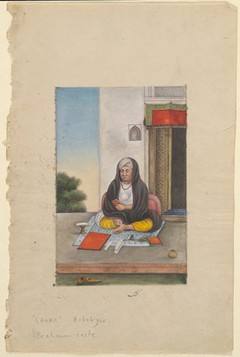
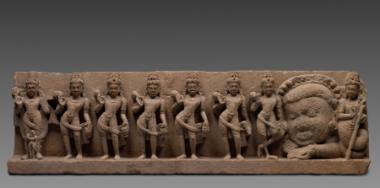
Prints in the head of this page, all public domain except where stated: An astrologer. Watercolour by an Indian artist, ca. 1825., [1825?], Wellcome Collection; Nine Celestial Bodies (Navagraha), 700s, Cleveland Museum of Art; a woodcut sun with a face, Proposals from the Sun-Fire-Office, London, 1757, Cambridge University Library (Fleuron). Ground: after Claudius Ptolemy, Ulm, 1482, Wikimedia Commons.
Umbriel offers every system here as a set of prompts to think with, never as a statement of fact about who you are. Take what's useful, leave the rest.
← All free calculators · Beginner guides · Free birth chart
The navamsa and the 9th harmonic run the same sum on different zodiacs. The harmonic chart calculator shows the working.