
⇑ Free Lagna Calculator: Your Vedic Ascendant
Umbriel's free Lagna calculator finds your Vedic ascendant (Lagna), the sign that was rising at your birth in the sidereal zodiac, with its degree and its lord, from your birth date, exact time and place.
Free, no account, no email. Runs in your browser.
14160+ people cast their chart here in the last 30 days.
No account, no email. The Lagna is worked out from your birth moment and place, with the Lahiri ayanamsa by default.
VEDICJyotish: the Vedic tradition, sidereal.
- What you'll needBirth date, exact time and place
- What you getYour Lagna sign and degree, the Lagna lord, and your Moon sign and nakshatra, in a full Vedic chart
- CostFree, no account required
What the Lagna is
The Lagna is the Vedic word for the ascendant: the point of the ecliptic rising on the eastern horizon at the moment of birth. In Jyotish it is the start of the chart. The first house is counted from it, every other house follows by whole signs, and the planet that rules it, the Lagna lord, is read as a guide to the whole chart.
Deeper.a one-breath read
It is the same point as the Western Rising sign, measured against the stars instead of the seasons. Jyotish uses the sidereal zodiac, which is shifted back by the ayanamsa, about 24° now. So a Lagna usually lands in the sign before the Western Rising sign. It is the same sign only when the Western Rising sits in the last six degrees or so of its sign.
The Lagna sweeps through a whole sign in roughly two hours, so it needs your exact birth time. It is one of the strongest reasons Vedic readers ask for the time to the minute.
How Umbriel computes it
Deeper.a one-breath read
Umbriel computes the tropical Ascendant for your birth moment and place, then subtracts the Lahiri ayanamsa (23°51′ at the start of 2000, as published, and about 24°13′ now) to get the sidereal Lagna. Whole-sign houses count from it. Other ayanamsas can be chosen in the Vedic chart; near a sign edge, a different ayanamsa can move the Lagna into the next sign, and Umbriel says so. Without a birth time, the Lagna is left out rather than approximated.
What's in your result
Deeper.a one-breath read
- Lagna sign and degreeThe sidereal ascendant, to the arcminute.
- The Lagna lordThe planet that rules the sign, which Jyotish reads as a guide to the chart.
- The Moon sign and nakshatraYour rashi and birth star, which need no birth time to within a sign.
- Whole-sign housesThe twelve bhavas counted from the Lagna.
- Your whole Vedic chartThe planets in their signs and the dasha periods on the same page.
Don’t know your birth time?
Deeper.a cup-of-tea read
Know it roughly? Give the time and say where it came from (a certificate, a parent’s memory, or something rough like “early morning”), and your chart tells you what could change within that window.
Don’t know it at all? Umbriel does not fill the gap with a guess. Tick “I don’t know the time at all” and it checks your whole birthday, hour by hour, then tells you two things: which placements are the same whatever time you were born, as exact as they would be if you knew the minute, and which are down to two signs, both named, so you know what a parent’s memory would settle.
The Ascendant, the Midheaven and the houses are left out rather than approximated. A birth time is the one thing they cannot be computed without, and an approximate Rising sign that looks exact is worse than no Rising sign at all.
Common questions
What is my Lagna?
It is the sign that was rising on the eastern horizon at your birth, measured in the sidereal zodiac. It is the starting point of a Vedic chart. Enter your birth date, exact time and place above and Umbriel gives you the sign and degree.
Lagna vs Rising sign: what is the difference?
They are the same point in the sky, named in two zodiacs. The Western Rising sign counts from the spring equinox; the Lagna counts from the stars, about 24° back. So the Lagna is usually the sign before the Western Rising sign.
What is the Lagna lord?
The planet that rules the Lagna sign: Mars for Aries and Scorpio, Venus for Taurus and Libra, Mercury for Gemini and Virgo, the Moon for Cancer, the Sun for Leo, Jupiter for Sagittarius and Pisces, Saturn for Capricorn and Aquarius. Jyotish reads where it sits as a guide to the whole chart.
Can I find my Lagna without a birth time?
No. A new Lagna rises about every two hours, so the date alone cannot say. Umbriel leaves it out rather than guessing, and still gives you the Moon sign and nakshatra.
How accurate is the Lagna here?
As accurate as your birth time and the ayanamsa you choose. The Lagna moves about a degree every four minutes, so a time out by eight minutes can move it about two degrees.
Is this Lagna calculator free?
Yes: Lagna, degree and Lagna lord, with no account and no email, calculated in your own browser.
What if I don’t know my birth time?
Umbriel checks your whole birthday hour by hour and separates what is certain from what is not. Placements that are the same whatever time you were born are shown as exact. Placements that changed sign during the day are shown as two named signs, so you know what a parent's memory would settle. The Ascendant, Midheaven and houses are left out rather than approximated. They cannot be computed without a time, and an approximate Rising sign that looks exact is worse than none.
Do I need an account or an email address?
No. There is no sign-up, no email capture and no free trial. Enter your details and the result is drawn in your own browser.
Go deeper
Every one of these is a page in its own right — written out, not generated on the fly.
Related free tools
 Next doorVedic Astrology ChartUmbriel's free Vedic chart uses the sidereal zodiac with the Lahiri ayanamsa: your Moon's nakshatra and every placement's, the Vimshottari dasha, the Kundli, all sixteen divisional charts, Sade Sati, the classical yogas, drishti, the Panchanga of your birth day, the Char Karakas, the Arudha Lagna and the Yogi point.
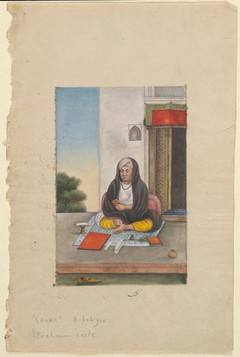
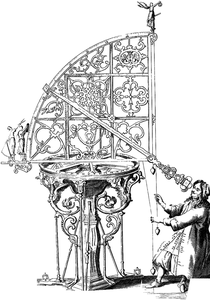
Prints in the head of this page, all public domain except where stated: An astrologer. Watercolour by an Indian artist, ca. 1825, [1825?], Wellcome Collection; armillary sphere, printer's tailpiece, 1750, Bibliothèque nationale de France; Johannes Hevelius, Machina coelestis, Danzig, 1673, Houghton Library. Ground: after Claudius Ptolemy, Ulm, 1482, Wikimedia Commons.
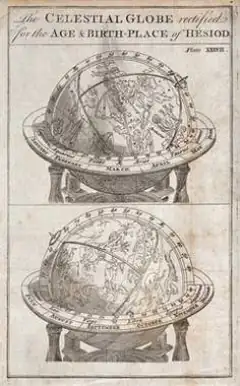
Further down the page: Astronomy: a celestial sphere, showing the birthplace and time of Hesiod. Engraving, Wellcome Collection. The next-door print comes from that page's own head. The pointing hand: a pointing hand, after a medieval manuscript margin (line art by Jerimee).
Umbriel offers every system here as a set of prompts to think with, never as a statement of fact about who you are. Take what's useful, leave the rest.