
⚶ Free Vesta Sign Calculator
Umbriel's free Vesta sign calculator finds your natal Vesta (the asteroid astrologers read for devotion and focus: what you tend like a small flame), with its sign, degree and house, from your birth date, time and place.
Free, no account, no email. Runs in your browser.
14160+ people cast their chart here in the last 30 days.
No account, no email. Vesta is worked out from its own orbit, to within about a degree.
MODERNA modern technique: twentieth-century astrology.
- What you'll needBirth date (time and place for the house)
- What you getYour Vesta sign and degree, the house it falls in, whether it was retrograde, and the rest of your birth chart
- CostFree, no account required
What a Vesta sign is
Vesta was the fourth asteroid found, by Heinrich Olbers at Bremen on 29 March 1807, and is named for the Roman goddess of the hearth, whose temple fire was kept lit by the Vestal priestesses. Your Vesta sign is where it stood at your birth. Modern astrologers read it for devotion and focus: what you keep faithfully alight, and what you protect by keeping apart.
Deeper.a one-breath read
Asteroids came into astrology late. Eleanor Bach published the first ephemeris of the four large ones in 1973, and Demetra George's Asteroid Goddesses (1986) gave Vesta the reading most astrologers use today. That makes it a modern technique, and it is labelled as one here.
Vesta is the brightest of the asteroids and the quickest of the four, circling the Sun in about three and a half years, so it spends roughly three to four months in a sign. People born within a few weeks of each other often share a Vesta sign; the house and the degree are what make it yours.
How Umbriel computes it
Deeper.a one-breath read
Umbriel computes Vesta's position from its orbital elements, corrected for the pull of Jupiter and Saturn, for the moment of your birth, and converts it to a longitude seen from Earth. For a 1987 birth it lands within two arcminutes of an outside ephemeris printout (26°40′ Gemini against 26°38′). That is accurate enough for the sign almost always; when Vesta is within a degree of a sign edge, Umbriel says so and names both signs. The house needs your birth time and place; without a time, Umbriel gives the sign and leaves the house out.
What's in your result
Deeper.a one-breath read
- Sign and degreeWhere Vesta stood at your birth, with a plain warning if it sits within a degree of the next sign.
- The house it falls inThe part of life you tend with the most devotion. This is the part that needs your birth time.
- Retrograde or directWhether Vesta was moving backwards at your birth.
- Ceres, Pallas and Juno beside itThe other three large asteroids, one tap away in the same chart.
- Your whole chartThe Sun, Moon and Rising sign on the same page.
Don’t know your birth time?
Deeper.a cup-of-tea read
Know it roughly? Give the time and say where it came from (a certificate, a parent’s memory, or something rough like “early morning”), and your chart tells you what could change within that window.
Don’t know it at all? Umbriel does not fill the gap with a guess. Tick “I don’t know the time at all” and it checks your whole birthday, hour by hour, then tells you two things: which placements are the same whatever time you were born, as exact as they would be if you knew the minute, and which are down to two signs, both named, so you know what a parent’s memory would settle.
The Ascendant, the Midheaven and the houses are left out rather than approximated. A birth time is the one thing they cannot be computed without, and an approximate Rising sign that looks exact is worse than no Rising sign at all.
Common questions
What does my Vesta sign mean?
Modern astrology reads Vesta for devotion, focus and the thing you keep faithfully alight. A Vesta in Virgo is often read as devotion through craft and care for detail, a Vesta in Pisces as devotion through imagination and service. Best held as a question to think with, not a verdict.
Who was Vesta?
The Roman goddess of the hearth and its fire. In Rome her flame was tended by the Vestal priestesses and was never meant to go out. Astrologers take the image as a way of reading what a person guards and keeps burning.
Is Vesta a planet or an asteroid?
An asteroid: the fourth found, in 1807, and the brightest one in our sky. Astrologers usually group it with Ceres, Pallas and Juno.
Can I find my Vesta sign without a birth time?
Almost always, yes. Vesta moves under a degree a day, so the date settles the sign unless it sat right on an edge. What you cannot get without a time is the house, and Umbriel leaves it out rather than guessing.
How accurate is Vesta here?
To within about a degree, and in a check against an outside ephemeris for a 1987 birth, within two arcminutes. Where Vesta is within a degree of a sign edge, Umbriel names both signs.
Is this Vesta sign calculator free?
Yes: sign, degree, house and retrograde status, with no account and no email, calculated in your own browser.
What if I don’t know my birth time?
Umbriel checks your whole birthday hour by hour and separates what is certain from what is not. Placements that are the same whatever time you were born are shown as exact. Placements that changed sign during the day are shown as two named signs, so you know what a parent's memory would settle. The Ascendant, Midheaven and houses are left out rather than approximated. They cannot be computed without a time, and an approximate Rising sign that looks exact is worse than none.
Do I need an account or an email address?
No. There is no sign-up, no email capture and no free trial. Enter your details and the result is drawn in your own browser.
Go deeper
Every one of these is a page in its own right — written out, not generated on the fly.
Related free tools
 Next doorCeres Sign CalculatorUmbriel's free Ceres sign calculator finds your natal Ceres (the dwarf planet astrologers read for nurture: how you care for others and how you need to be cared for), with its sign, degree and house, from your birth date, time and place.
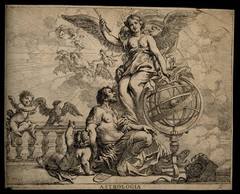
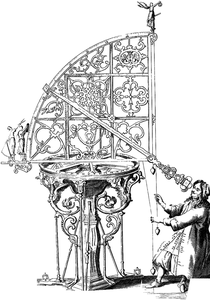
Prints in the head of this page, all public domain except where stated: A woman with an armillary sphere; representing astrology. Etching by C. Schut, 1600-1699, Wellcome Collection; Urania's Mirror, Sidney Hall, 1825, Library of Congress via Wikimedia Commons; Johannes Hevelius, Machina coelestis, Danzig, 1673, Houghton Library. Ground: Andreas Cellarius, Harmonia Macrocosmica, 1661, Wikimedia Commons.
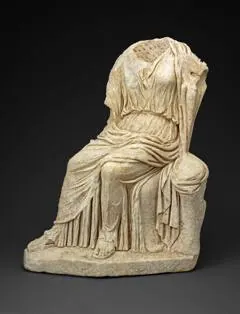
Further down the page: Statue of a Seated Woman, Roman, 2nd century, Art Institute of Chicago. The next-door print comes from that page's own head. The pointing hand: a pointing hand, after a medieval manuscript margin (line art by Jerimee).
Umbriel offers every system here as a set of prompts to think with, never as a statement of fact about who you are. Take what's useful, leave the rest.