The Goat
The Goat again: tireless public servants who keep cheats afraid.
[p. 67] But when the heedless Goat ²⁴Exalts his Beard,Alone, as stragling from the other Herd;Then Tempers quick, and piercing Minds are wrought,With Cares unweary'd, and of active Thought:They scorn that Rest, which private Minds enjoy,But fawn upon the Crowd, and Court Employ;That's their delight, and they're enlarg'd by FateTo serve the Many, and be Slaves of State.Whilst they survive, smooth Knaves shall fear to CheatIn hopes of scapeing, or of grownig Great;They shall espouse their injur'd Country's Cause,And be severe, yet not exceed the Laws;Imprison Cheats, or else with rigorous FinesBreak their Estates, and curb their lewd Designs.Happy this Temper, would they still pursueThese useful Pleasures, and affect the True;But they'll from Business, and from Court retire,(Loose are their Words, and looser their Desire;)Lewd Love and Wine indulge, and wast their AgeIn Mimick Dancing, or affect the Stage.
The notes
²⁴ This Goat or Haedus Scaliger could not find, but Huetius says, the Single Haedus is put by Manilius for those two Haedi that are in the left hand of Heniochus, or the Driver. Thus Horace.
— Arcturi cadentis
Impetus, aut orientis Haedi,
and Propertius
Purus & Orion, purus & Haedus erit. (Creech’s note, 1697)
In the app the old words open a note in the margin when you tap them, the old books read the planets of your own chart, and each book opens where you left it. Free, no account, no email.
14160+ people cast their chart here in the last 30 days.
Keep reading
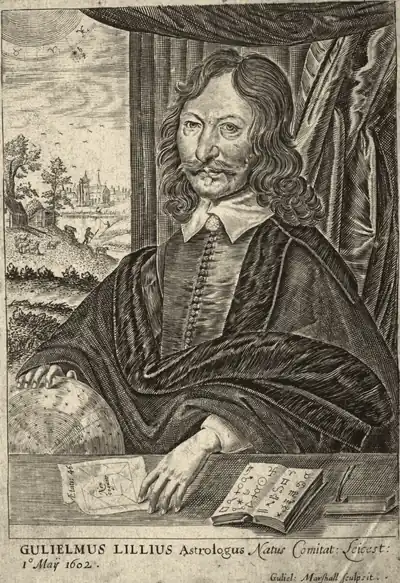
The text is Thomas Creech's 1697 verse translation, checked word by word between three scans of the same type (the 1697 printing, the 1700 printing and a third copy). The long s is printed as s; every other spelling is Creech's. Pages are cited as the 1697 printing numbers them. The portrait is William Marshall’s engraving of Lilly from the front of the 1659 printing (Wellcome Library, public domain).