◑ Birth Time Sensitivity: What Still Holds If Your Time Is Off
Umbriel's free Birth Time Sensitivity guide sorts every birth-time calculator by how far out your time could be: a few minutes, an hour or two, or only the day. It says which answers hold, which may change and which are lost, and why, with no time asked for.
How far out could your time be?
Pick the one that sounds like you. The list below shows only what holds at that distance.
- Sun signHolds The Sun moves about one degree a day, so minutes do nothing to it.Holds Two hours is about a twelfth of a degree of the Sun.May change Fine on 29 birthdays in 30. On the one day the Sun changes sign, the hour decides.
- Jupiter to Pluto, Chiron and the North NodeHolds They move too slowly for minutes to matter.Holds Still the same sign, except in the days around one of their sign changes.Holds Same, unless it was changing sign that very week; a calendar settles that.
- Mercury, Venus and Mars signsHolds Under a tenth of a degree even for the fastest.Holds A fraction of a degree. Only a birth right at a sign edge can tip.May change On the one day in a month or two when one of them crosses a sign edge, the hour decides.
- Moon signHolds The Moon moves about half a degree an hour, so ten minutes is under a tenth of a degree.May change Two hours either way is about two degrees of Moon. Usually the same sign; about one birth in fourteen sits near the edge.May change The Moon changes sign on roughly four birth dates in nine. Know which two signs it could be.
- Moon degree, Moon phase, nakshatraHolds A tenth of a degree for ten minutes. The nakshatra holds unless the Moon is on an edge.May change About a degree out for two hours either way, so a nakshatra edge or the exact Sun-Moon angle can move.Lost The Moon covers about 13 degrees in a day, close to a whole nakshatra.
- Vimshottari dasha datesMay change The first period's balance moves by weeks, and every later date moves with it.Lost Every date slides by roughly three to eleven months for each hour out, depending on the ruling planet.Lost The starting point is not known, so no date is.
- Rising sign (Ascendant)May change The Ascendant moves about a degree every four minutes, and a sign takes roughly one to three hours to rise. Ten minutes out changes it only near an edge.Lost An hour either way is a two-hour window, which usually straddles two signs.Lost Every sign rises in a day. The Ascendant is unknown.
- MidheavenMay change It turns at about the same pace as the Ascendant, a degree every four minutes.Lost A two-hour window usually covers a sign change.Lost It passes through every sign in a day.
- Houses, and the planets in themMay change The cusps slide a degree every four minutes, so a planet near a cusp can change house.Lost The cusps move about 15 degrees an hour, so a planet's house is known only if it sits deep inside one.Lost No time means no houses.
- Part of Fortune, other lots, chart rulerMay change They are built from the Ascendant, so they move when it does.Lost The Ascendant is not settled, so neither is the lot or the ruler.Lost Not known, and whether it was a day or night birth is not known either.
- Day or night birth (Firdaria)Holds Unchanged unless you were born within minutes of sunrise or sunset.May change Can flip if you were born within a couple of hours of sunrise or sunset.Lost A day-only answer cannot say whether the Sun was up.
- Human DesignHolds The Moon crosses a line in under two hours and a gate in about ten, so ten minutes rarely matters.May change A Moon line can change, and a Moon gate that completes a channel can change your Type.Lost The Moon moves through more than one gate in a day.
- Primary directionsLost Four minutes of birth time is about a year of life in the timing. Ten minutes is about two and a half years.Lost Hours out is decades of life out.Lost It needs the minute.
- Solar and lunar return chartsMay change The return day holds. The return moment slides by about as much as your time is off, and its angles and houses move like the Ascendant.Lost The day holds; the angles and houses of the return chart do not.Lost The day can be found; the chart cannot.
4420+ people cast their chart here in the last 30 days.
Why these verdicts
It is arithmetic on speeds. The Sun moves about one degree a day. The Moon moves about thirteen degrees a day, close to half a degree an hour. The Ascendant and the Midheaven turn through the whole zodiac once a day, which is on average one degree every four minutes. Every verdict follows from setting your window against how fast that point moves.
Holds means the same answer across the whole window, bar a birth right on an edge. May change means it usually survives but can tip, or the detail moves while the headline holds. Lost means the window is wider than the answer.
These are averages. A sign takes roughly one to three hours to rise at most latitudes, and it is longer or shorter for your latitude and your sign. For your own chart the Birth-Time Wobble casts it once a minute across your window and finds each change to the second. This page does not guess your time and does not rank minutes.
Common questions
Which calculators still work if I do not know my birth time?
The signs of the Sun and the slower planets, Chiron and the North Node hold with only a date. The Moon sign usually does too, on about five birth dates in nine, and Venus and Mars almost always do. The Ascendant, Midheaven, houses, lots, chart ruler, dasha dates and primary directions need the time. The table on this page sorts every one by how far out your time could be.
How wrong can my birth time be before my rising sign changes?
On average the Ascendant moves about one degree every four minutes, and a sign takes roughly one to three hours to rise at most latitudes. Ten minutes out changes your rising sign only if you were born near a sign edge. An hour out usually covers more than one sign. How far depends on your latitude and the sign, so the Birth-Time Wobble measures it for your own chart.
Does it tell me my birth time?
No. It never guesses a time and nothing here ranks minutes. Narrowing a time down from dated life events is the job of the rectifier in the app.
How do you know which calculators are affected?
From how fast each point moves. The Sun moves about a degree a day, the Moon about thirteen, the Ascendant and Midheaven about a degree every four minutes, so the sorting is arithmetic on those rates. The table gives the reason beside every verdict.
What should I do if my birth certificate time is not exact?
Many are rounded to the nearest five, fifteen or thirty minutes. Treat a rounded time as a window of that size and read the table under 'a few minutes out', then run the Birth-Time Wobble on your chart to see which points actually change inside it.
Does it send my details anywhere?
No. This page asks for no details at all.
Go deeper
Each of these is a free tool in its own right.
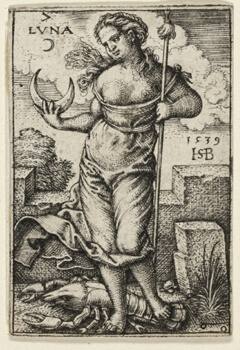
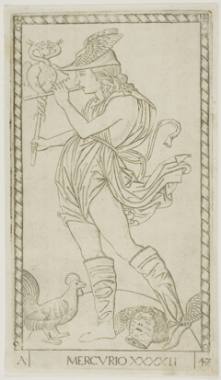
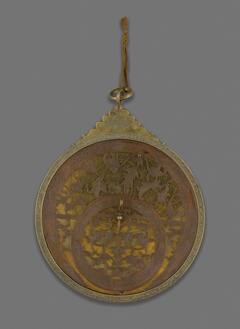
Prints in the head of this page, all public domain except where stated: Moon, plate seven from The Seven Planets with the Zodiacs, Sebald Beham German, 1500-1550, 1539, Art Institute of Chicago; Mercury, plate 42 from Planets and Spheres, Master of the E-Series Tarocchi Italian, active c. 1465, c. 1465, Art Institute of Chicago; Astrolabe, Iran Isfahan, Qajar dynasty (1786–1925), Late 18th century with later additions, Art Institute of Chicago. Ground: Giambattista della Porta, De humana physiognomonia, 1586, Wellcome Collection (CC BY 4.0).
Umbriel offers every system here as a set of prompts to think with, never as a statement of fact about who you are. Take what's useful, leave the rest.
← All free calculators · Beginner guides · Free birth chart
A harmonic multiplies a birth-time error by its number. The harmonic chart calculator shows how far the Moon moves.